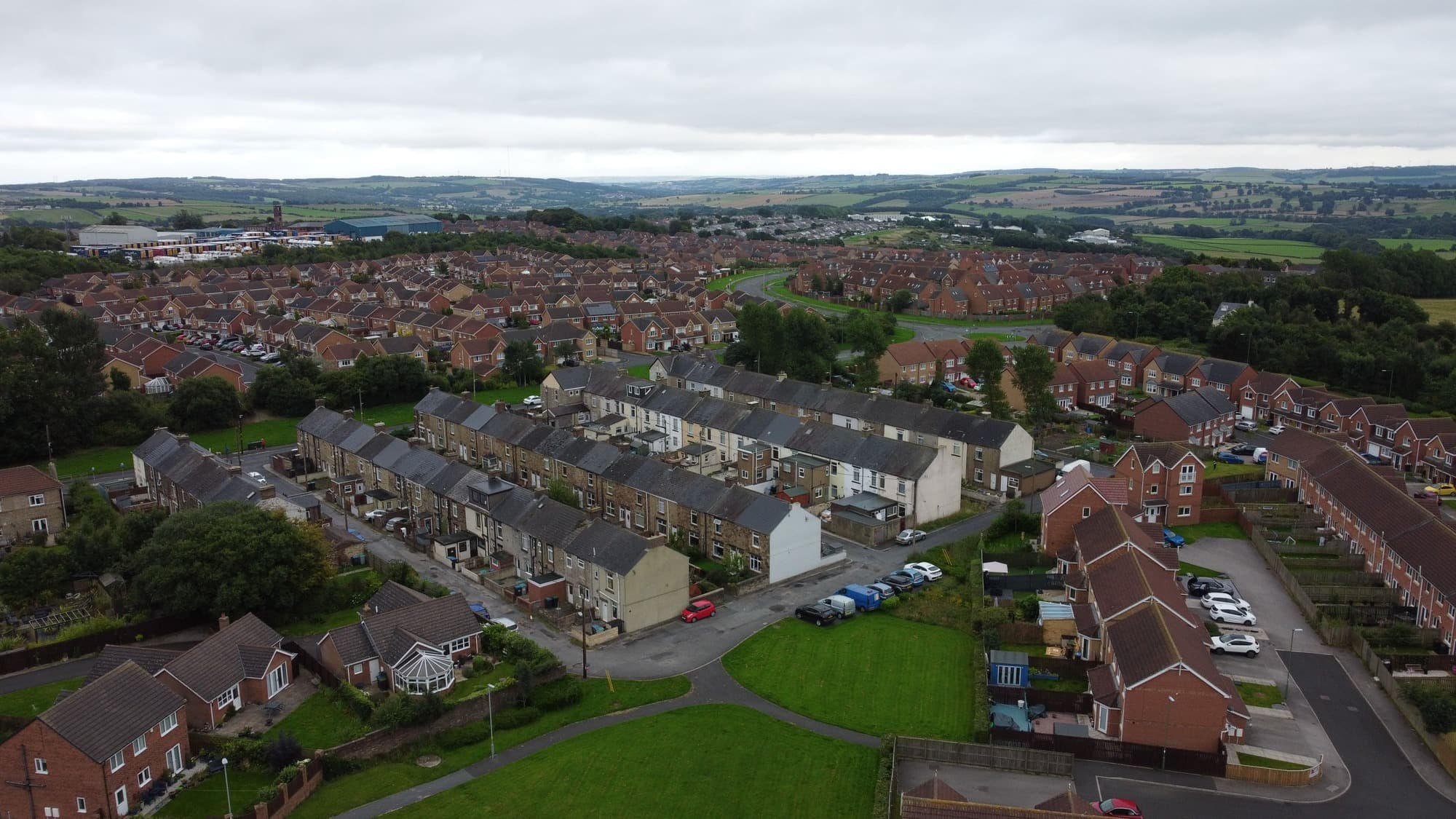
Consett, a town nestled high in the hills of County Durham, has a rich and varied history, with population changes that reflect its journey from a small village to a booming industrial centre, and now to a thriving modern town. Understanding the population trends in Consett offers a fascinating glimpse into its past, present, and future.
Consett’s Current Population
As of the 2021 Census, Consett’s population stands at 29,885. This figure highlights the town’s steady growth and successful regeneration efforts following the industrial decline of the late 20th century. The town covers a built-up area of 7.9 km², with a population density of approximately 3,776 people per square kilometre. This density underscores Consett’s role as a compact, community-oriented town where residents enjoy close proximity to essential amenities and services.
A Historical Look at Consett’s Population
Consett’s population has fluctuated significantly over time, shaped largely by the town’s industrial history.
- 1841: Consett’s origins as an industrial town can be traced back to 1841, when it was a small village with a population of just 145 people. The discovery of coking coal, iron ore, and limestone in the area soon transformed Consett into an industrial hub.
- Late 19th Century: By the late 1800s, Consett had grown rapidly, with its population swelling as the steel industry took hold. The establishment of the Consett Iron Company in 1864 was a pivotal moment, attracting thousands of workers and their families. By the turn of the 20th century, Consett had become one of the leading steel-making centres in the world.
- Mid-20th Century: The town’s population peaked in the mid-20th century, reaching approximately 39,000 during the 1960s. At this time, Consett was a significant industrial hub, with the steelworks employing around 6,000 workers. The town’s economy and community were deeply intertwined with the fortunes of the steel industry.
The Impact of Industrial Decline
The closure of the Consett steelworks in 1980 marked a turning point in the town’s history. The loss of 3,700 jobs led to a sharp decline in the population, as many residents left in search of employment elsewhere.
- 1981: Following the steelworks’ closure, Consett’s population dropped to around 25,000. The town became one of the most economically depressed areas in the UK, with high unemployment rates and significant outmigration.
Consett’s Resurgence in the 21st Century
Despite the challenges of the 1980s and 1990s, Consett has experienced a notable resurgence in recent years. Regeneration projects, including the redevelopment of the former steelworks site and new housing developments, have attracted people back to the town.
- 2021: Consett’s population reached 29,885, reflecting the town’s recovery and ongoing growth. This resurgence is also evident in the town’s infrastructure, with new schools, leisure facilities, and businesses contributing to a renewed sense of community and optimism.
Population Demographics and Composition
Consett’s population is slightly female-dominated, with women making up 51.2% of the population and men 48.8%. The town’s age distribution shows a significant proportion of working-age adults (60.3%) and a substantial elderly population (19%). The town also has a small but growing population of children (20.7%).
Ethnically, Consett remains predominantly White (98%), with small communities of Asian, Mixed/Multiple ethnic groups, Black, and Arab residents. In terms of religion, 61.4% of Consett’s population identifies as Christian, while 37.3% have no religious affiliation.
The Future of Consett’s Population
Looking ahead, Consett’s population is expected to continue growing as the town benefits from its strategic location and ongoing investment. The blend of historical charm and modern development makes Consett an attractive place to live, work, and raise a family.
Consett’s population history is a story of resilience and adaptation. From its rise as a steel-making giant to its decline and subsequent recovery, the town’s population trends mirror the broader economic and social changes that have shaped Consett over the years. Today, Consett stands as a vibrant community that honours its past while looking forward to a bright future.