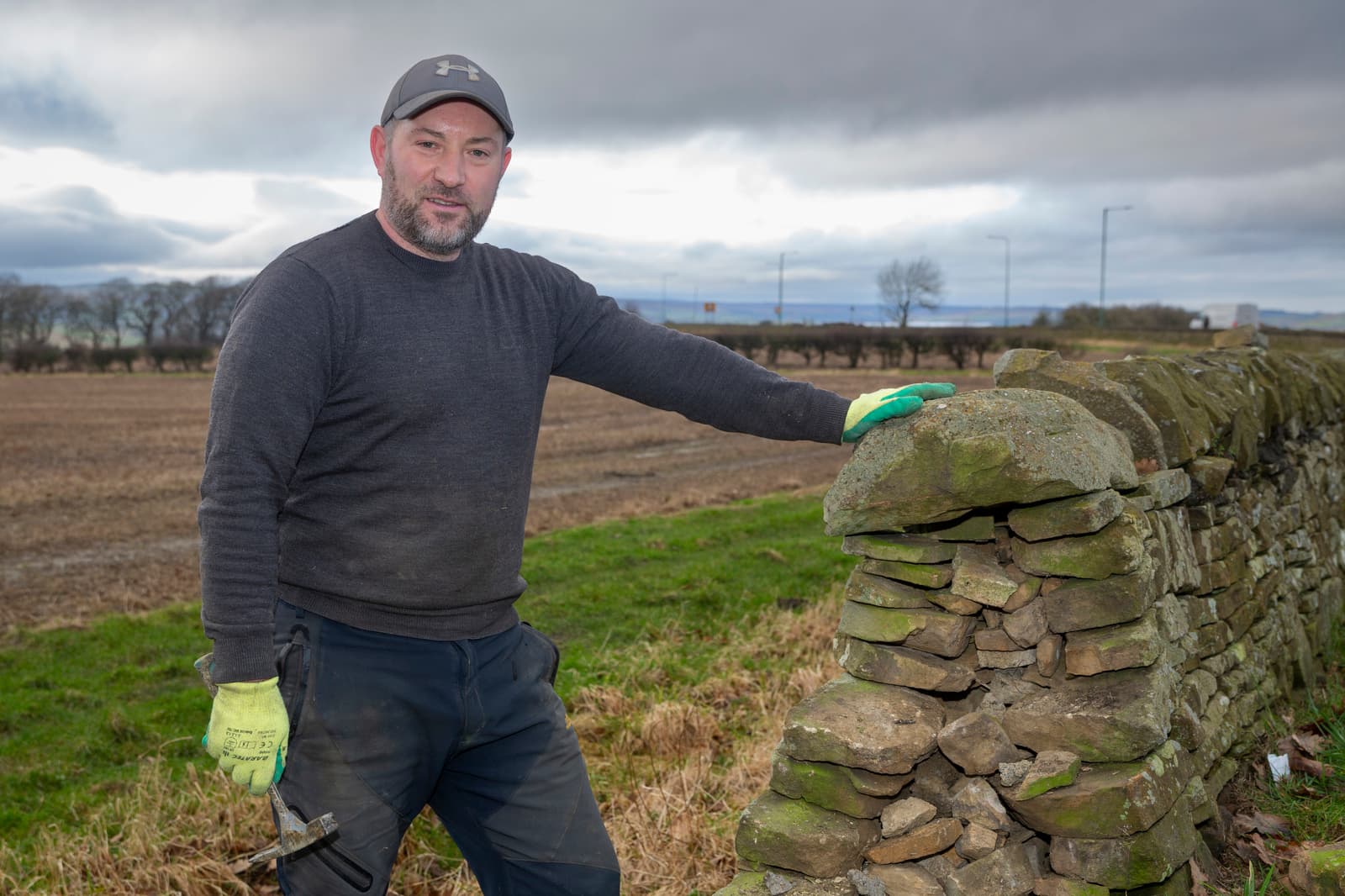
The Northern landscape is characterised by stone, whether in the crags of the ‘Whin sill’ along the ancient Roman frontier or in the stone walls that define farmlands across the Pennines.
The art of ‘Dry Stonewalling’ involves using local stone, often sourced directly from the nearby terrain. This method becomes an ideal choice when there is a readily available supply of stone. Remarkably durable, these dry stone walls can endure for 100 to 200 years, surpassing many other types of fencing and even outlasting mortared masonry constructions.
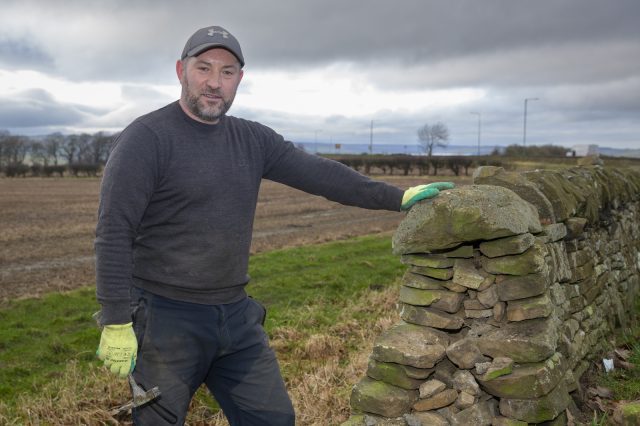
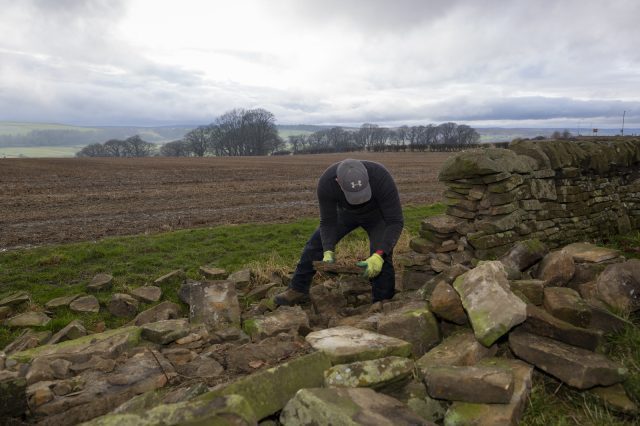
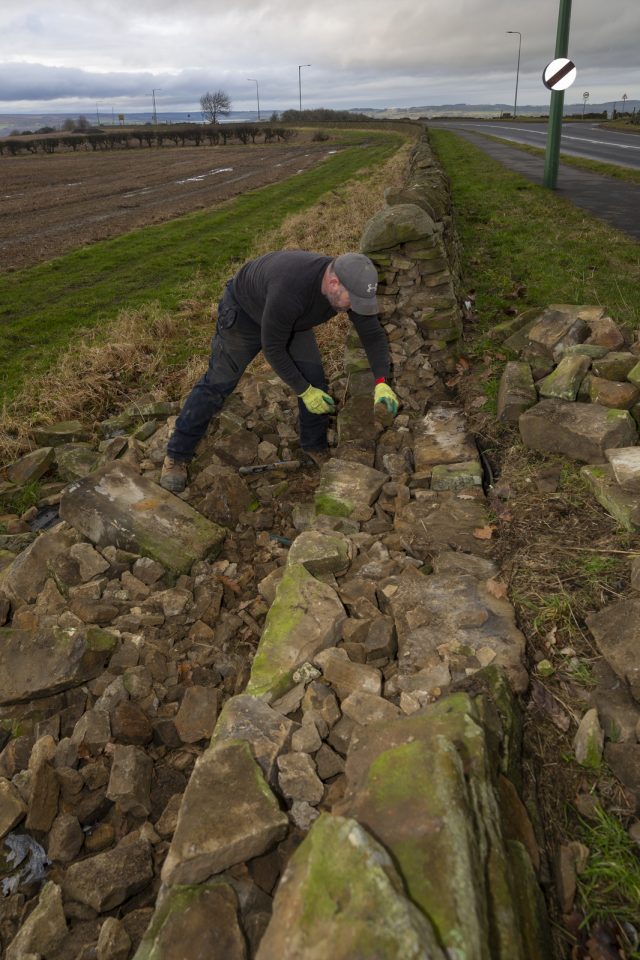
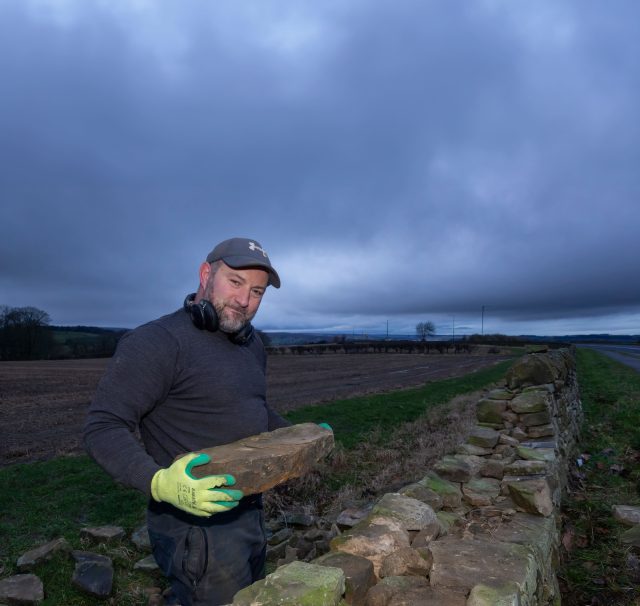
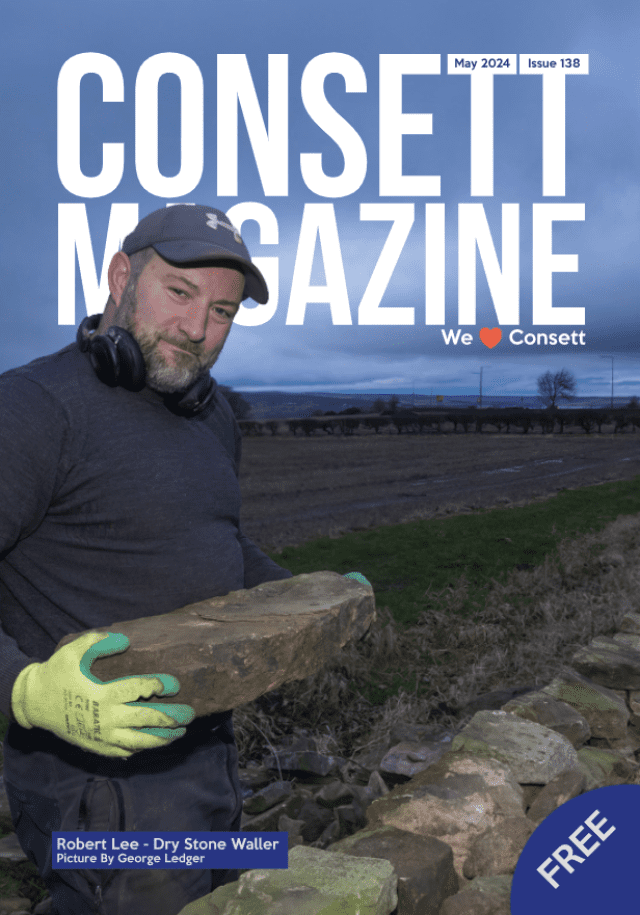
A master of this construction technique is Robert Lee from Castleside, who has dedicated many years to building and repairing dry stone walls. His presence, or more commonly, the results of his workmanship, can be seen along farmland in the Consett area and stretching further into Weardale.
Images and story supplied by George Ledger Photography, Consett in Focus, Work and Trades Project.
History of Dry Stone Walling
Dry stone walling, a centuries-old craft in the British Isles and Ireland, involves constructing structures from stones without mortar, relying instead on careful stone selection and interlocking for stability.
Dating back to 3800 BC in Ireland and evident in ancient European sites like Greece’s Mycenae, this technique primarily flourished in the upland areas of the UK, where natural stone is plentiful. In Scotland, these walls are called dykes, crafted by professionals known as ‘dykers’.
Dry stone walls are particularly common in the the Scottish Highlands and the West of Ireland, from field boundaries to terracing supports. The skill migrated globally with settlers, notably to the United States, Australia, and New Zealand. Recognised for its cultural significance, dry stone walling was listed on the UNESCO Intangible Cultural Heritage of Humanity in 2018. The UK’s Dry Stone Walling Association helps preserve this traditional skill through certification schemes.